After Keitai came Ankan, Senka, Kinmei, Bidatsu, Yōmei and Sushun. In these years, Japanese history moved decisively.
In Kinmei’s reign, Buddhist images and scriptures arrived from Paekche and Buddhism was officially transmitted. Whether to accept it set the pro-Buddhist Soga against the anti-Buddhist Mononobe; the Soga prevailed, and thereafter held real power.

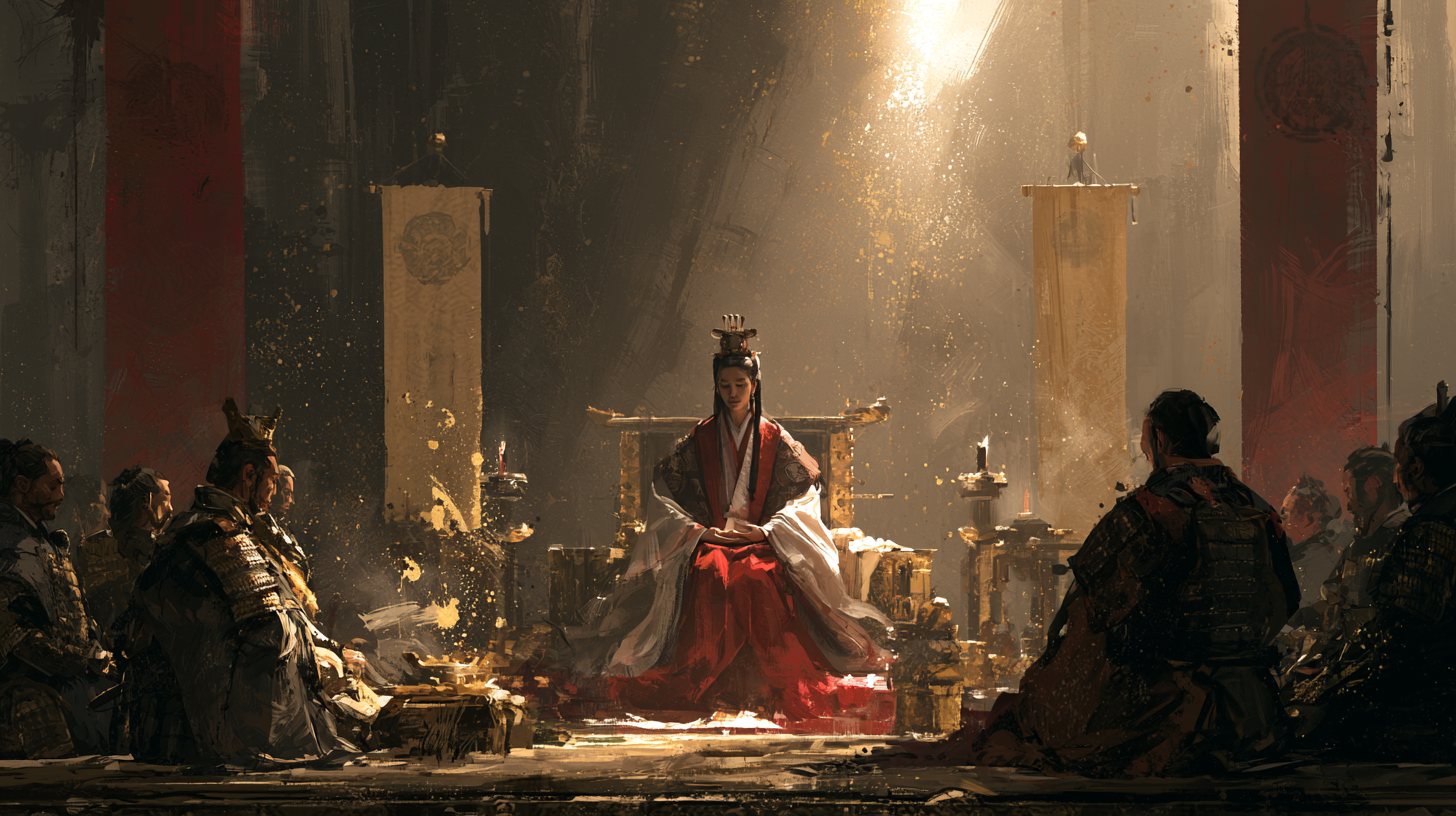
Emperor Sushun, in conflict with the increasingly powerful Soga no Umako, met the exceptional fate of assassination. Out of the turmoil, the consort of Emperor Bidatsu came to the throne as the thirty-third sovereign, Suiko — Japan’s first reigning empress.
In her reign her nephew Prince Shōtoku served as regent, the twelve court ranks and the Seventeen-Article Constitution were established, and envoys were sent to Sui China. Under state patronage Buddhism flourished and the Asuka culture was born. The shape of Japan as a state was becoming clear.

Yet the Kojiki is startlingly brief about Suiko: “Dwelling in the palace of Oharida, she ruled the realm.” Then the location of her tomb — and that is all. Prince Shōtoku is not named; the constitution is not mentioned.

A book that began with the vast drama of the parting of heaven and earth closes in a few lines of genealogy. Perhaps that is the surest sign that myth has dissolved completely into history. From that distant day when a spear was thrust into a churning sea — here, the long road ends.