At the palace of Kashii in Tsukushi, the fourteenth emperor Chūai sought divine guidance on whether to attack the Kumaso. As he played the koto and Takenouchi-no-Sukune sought the oracle, a god descended upon his consort Okinagatarashi-hime.
“There is a land to the west, rich in gold and silver and dazzling treasures. I now grant that land to you.” But the emperor doubted: “From high ground I see no land to the west, only the great sea.” Calling the god a liar, he let his hands fall from the koto.

When the lamps were lit a while later, the emperor was already dead — the penalty for slighting the god’s word. In alarm the people purified the land of its offences and sought the oracle again. The god repeated the same words and added: “This land shall be ruled by the child now in her womb.”
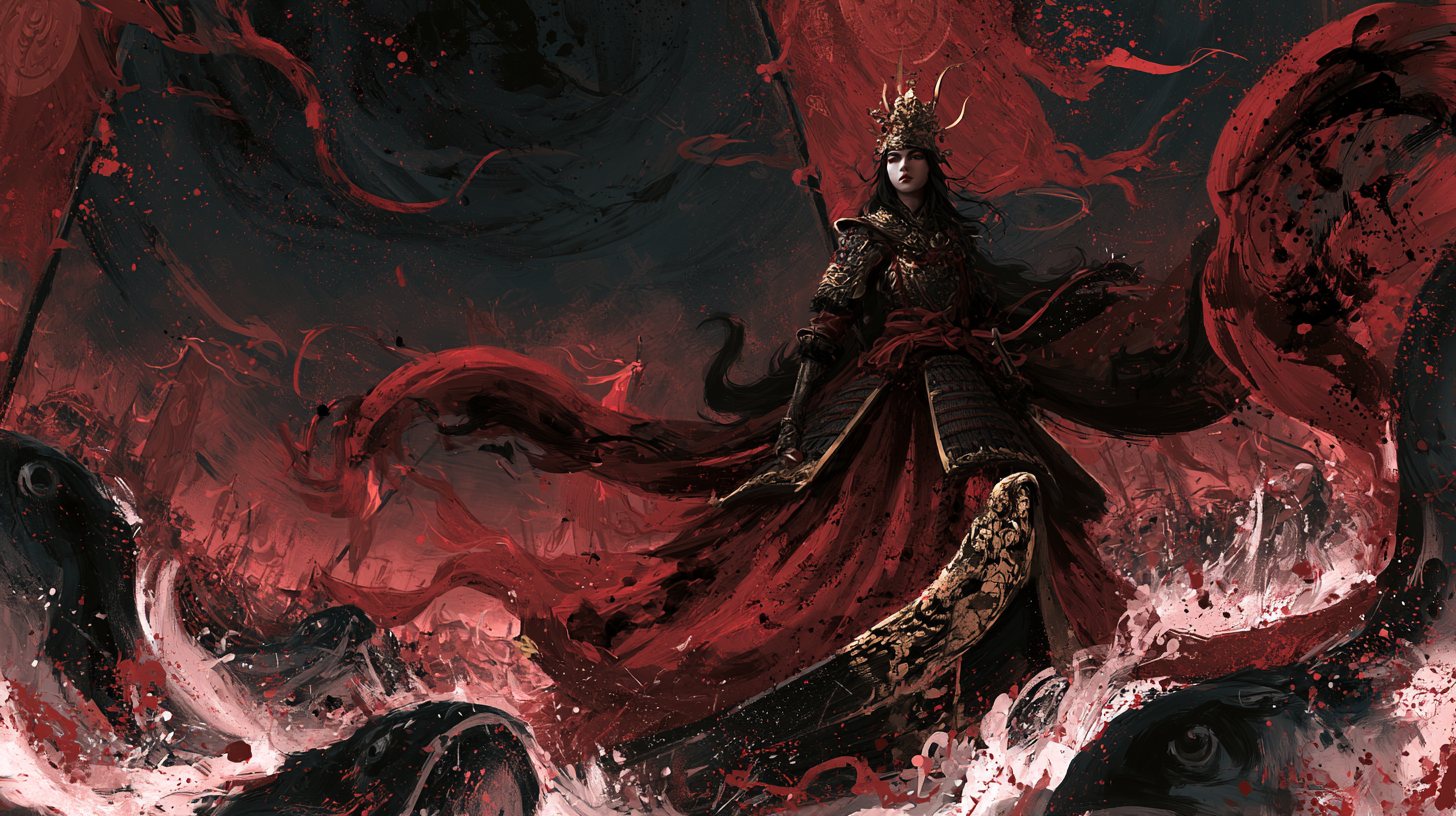
The empress was with child. Obeying the god, she bound a stone at her waist to delay the birth, mustered warships, and crossed the sea. A following wind rose, great and small fish bore the ships along, and the waves are said to have carried them into the heart of Silla.

Awed, the king of Silla submitted without battle, vowing: “Henceforth I shall serve as keeper of the emperor’s horses and send tribute every year.” Paekche, the Kojiki says, followed suit.

Returning home, the empress gave birth at Umi in Tsukushi to the child who would become Emperor Ōjin. She is known as Empress Jingū, and is said to have governed long in her young son’s stead. The historicity of this campaign has been debated intensely in modern times.