Emperor Sujin and the Plague

Chapter 3

Emperor Sujin and the PlagueSujin Tennō

A land dying of plague is saved by the voice of a god.

◀ Back to Book II
This retelling is a heavily condensed, dramatized modern version of the original Kojiki. Details may differ from the original text and scholarly translations.

In the reign of the tenth emperor, Sujin, a plague spread through the land. So many died, the Kojiki says, that nearly half the people were lost.

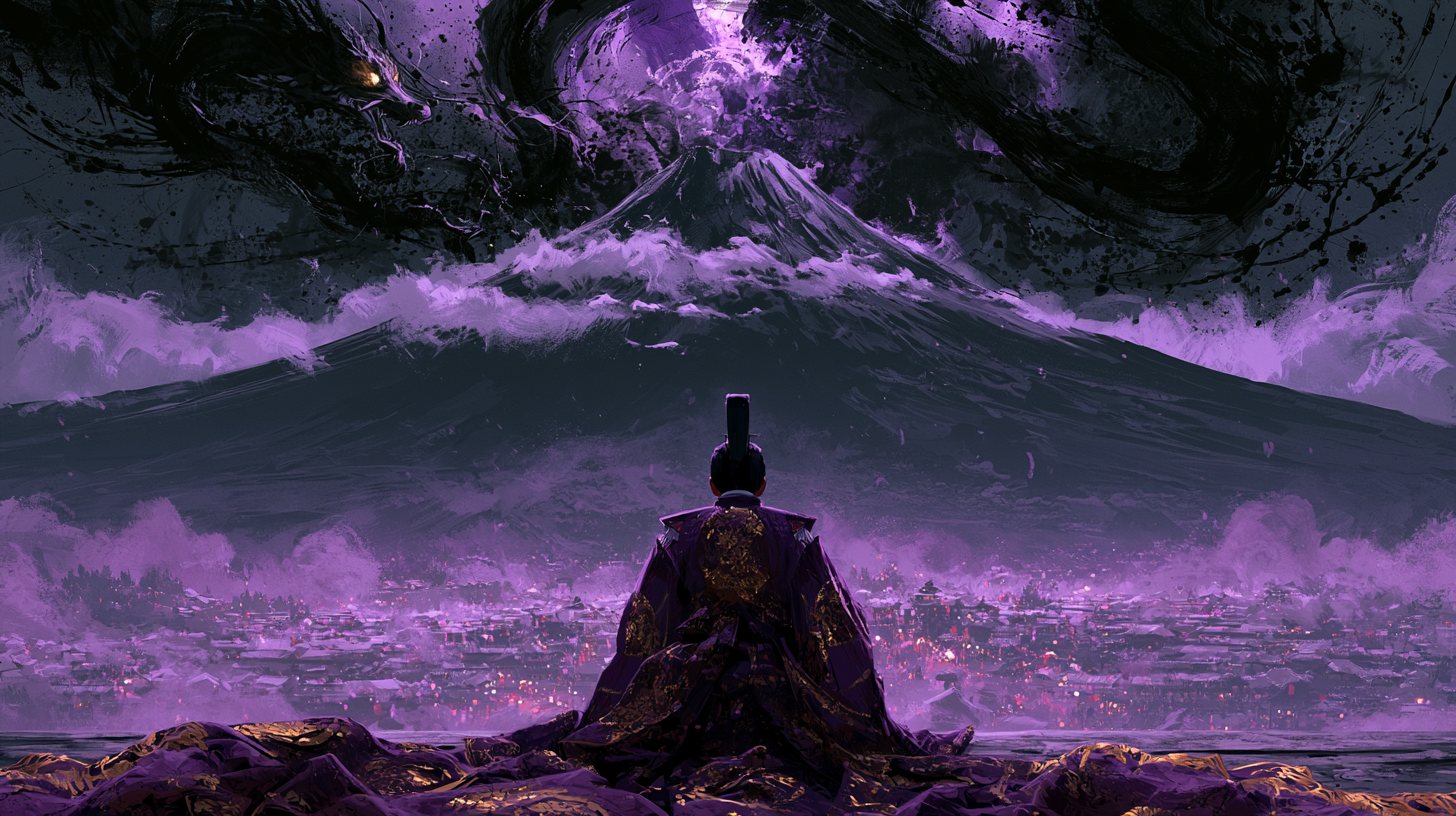
The emperor lay upon the divine bed to seek the will of the gods. In a dream Ōmononushi appeared and declared: “This pestilence is by my will. Seek out my descendant Ōtataneko and let him worship me; then the calamity will cease and the land be at peace.”

Plague across the land

Messengers found Ōtataneko in the village of Mino in Kawachi. When he was set to worship the god of Mount Miwa, the raging plague stopped at once, and the land grew prosperous again.

Ōmononushi in a dream

With the country calm, the emperor sent generals to the four quarters: Ōbiko to the north, Takenunakawawake to the east, Kibitsuhiko to the west, and Hikoimasu to Tanba. Through these campaigns, later called the Four Generals, unsubmissive regions were pacified.

Prayer at Mount Miwa

The emperor also decreed that men should render game from the hunt and women their weaving — held to be the first taxation in Japan. For uniting worship and practical rule, Sujin is honored as “the emperor who first ruled the land.”

People & Deities

Emperor Sujin
崇神天皇
Tenth emperor; quelled the plague, sent out the four generals, and established taxation.
Ōmononushi
大物主神
The powerful deity dwelling on Mount Miwa.
Ōtataneko
意富多多泥古
Descendant of Ōmononushi, whose worship ended the plague.
The Four Generals
四道将軍
Commanders sent to the four quarters to pacify the land.

Background & Trivia

Ōmiwa Shrine
Ōmiwa Shrine in Nara has no main sanctuary: Mount Miwa itself is the object of worship. It is counted among Japan’s oldest shrines.
Two “first” emperors
Both Jimmu and Sujin bear the title “the emperor who first ruled the land,” leading some scholars to see Sujin as the first historical sovereign.
Share this chapter✕LINEFacebook