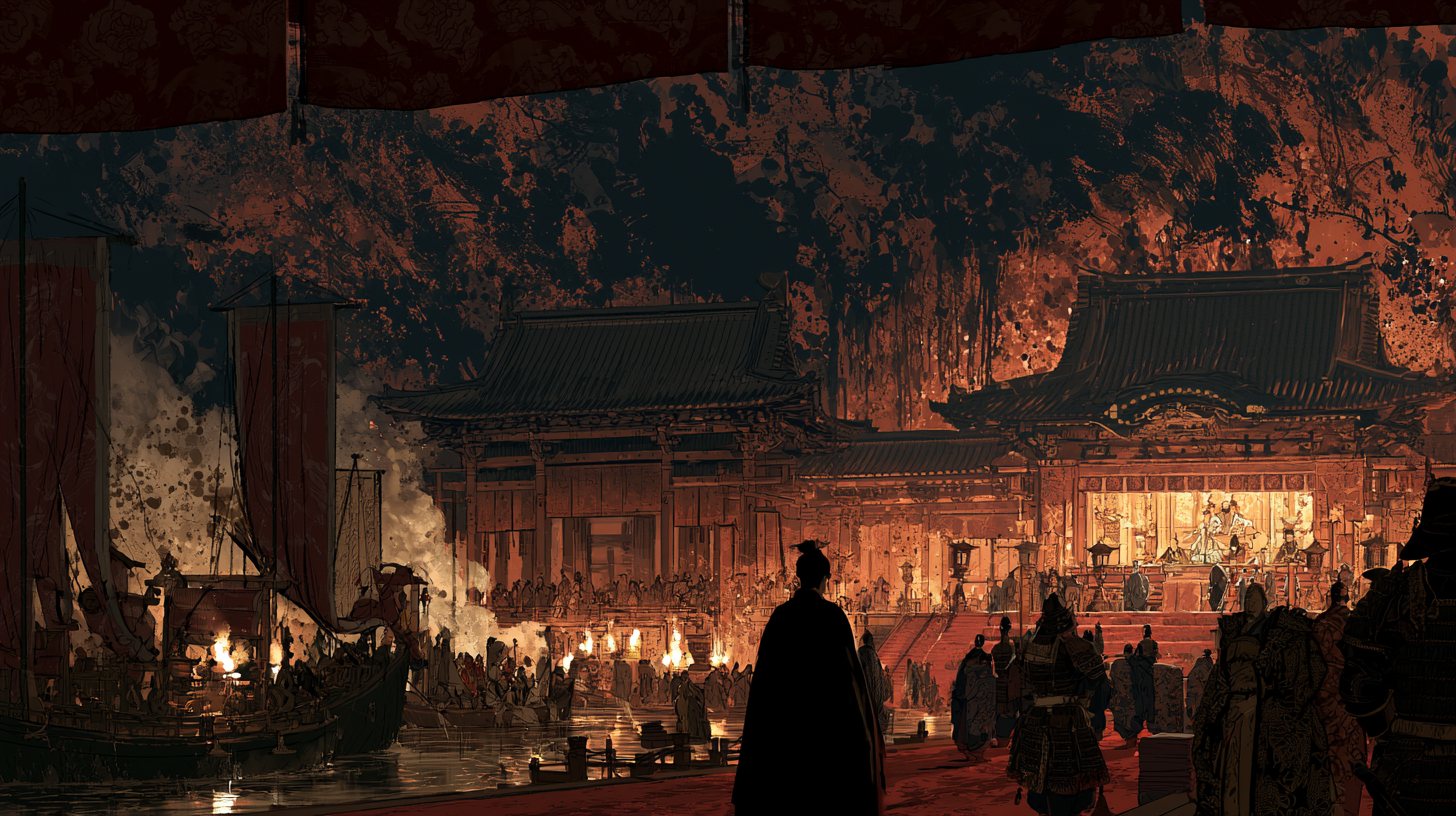
The reign of the fifteenth emperor, Ōjin, is drawn as an age when exchange with lands across the sea flourished.
From Paekche came Wani, bearing ten volumes of the Analects and one of the Thousand Character Classic. This is held to be the beginning of Chinese writing and Confucian learning in Japan, the foundation of the culture that followed.

Not only learning came. Weavers, smiths and brewers crossed over as well. Of the sake brewed by Susukori, who brought the craft of brewing, the emperor drank so merrily that he sang a song and struck a great stone in the road with his staff — whereupon, the tale says, the stone ran away.

The reign also tells of the succession. The emperor wished his youngest son Uji-no-Wakiiratsuko to follow him, but after his death the elder brother Ōyamamori raised troops to seize the throne. Aided by another brother, Ōsazaki, the young prince defeated him — and then the two survivors each tried to yield the throne to the other, until the younger took his own life.

So Ōsazaki was enthroned: the Emperor Nintoku of the next chapter. Ōjin himself was later identified with Hachiman, god of martial fortune, and enshrined in some forty thousand shrines across Japan. From the age of myth to a history entwined with the continent — Book II ends here.