The nineteenth emperor, Ingyō, long refused the throne. Having suffered illness for years, he declared himself unfit to rule, and only the pleading of his ministers and his consort persuaded him to accept.
In his reign a serious disorder had spread: people claimed lofty clan titles at will, and the order of lineages had collapsed. “While the clan titles are confused,” the emperor said, “there can be no just rule.”

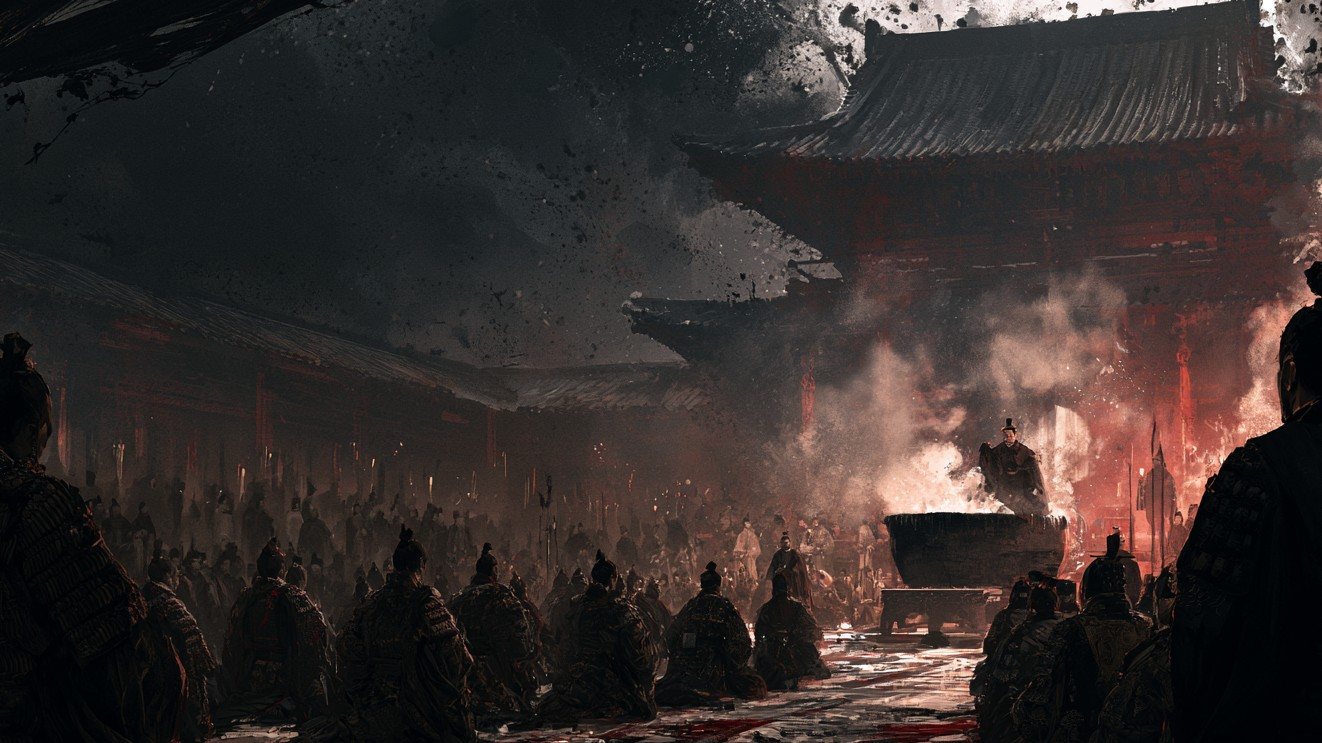
So the ordeal of kugatachi was held. Cauldrons were set on the hill of Amakashi in Asuka and the water brought to a boil, and people were made to plunge in their hands: those whose claims were true would be unharmed, and liars scalded. The false, the Kojiki says, fled in fear, and the order of the clans was restored.
The reign also tells a bitter love story. The crown prince Kinashi-no-Karu fell in love with his full sister, Karu-no-Ōiratsume. Love between siblings of the same mother was the gravest taboo of the age.

When it came to light, the people turned from the prince and he was exiled to Iyo (modern Ehime). His sister followed him, and there they met again — but no path was open to them, and they took their own lives together.

“Long are the days since you departed; I will not wait, I will go to meet you.” The poems they exchanged are among the most beautiful and sorrowful in the Kojiki.